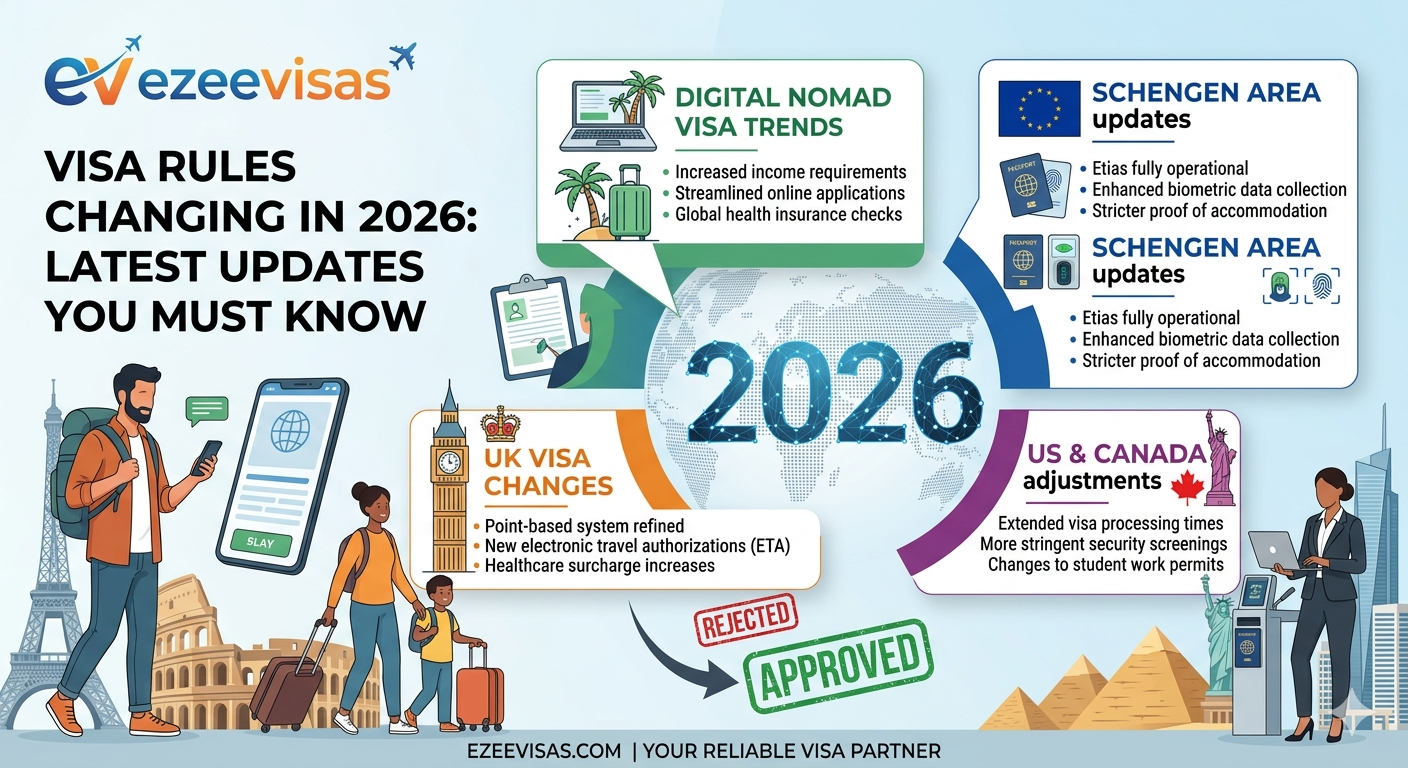
International travel rules continue to evolve, and visa rules 2026 are shaping up to be one of the biggest areas travelers need to monitor. Governments worldwide are introducing digital systems, tightening documentation requirements, expanding electronic visa programs, and adjusting processing timelines.
Whether you're planning tourism, business travel, study abroad, or long-term relocation, understanding the latest visa changes can help avoid delays, unexpected costs, and rejected applications.
This guide covers the major trends, expected updates, and what travelers should do to stay prepared throughout 2026.
Why Visa Rules Are Changing in 2026
Visa policies are evolving for several reasons:
- Increased digitalization of immigration systems
- Enhanced border security and traveler verification
- Growth in remote work and long-stay travel programs
- Faster processing through automation and AI-assisted systems
- Higher demand for international tourism recovery
Many countries now prioritize secure and streamlined entry processes while reducing paperwork.
Major Visa Rule Changes Expected in 2026
Digital-First Visa Applications Become Standard
One of the biggest visa rules 2026 developments is the continued shift toward online application systems.
Expected changes include:
- Fully digital application submission
- Electronic document verification
- Mobile-based application tracking
- Digital approval letters replacing physical documents
- Increased biometric appointments
Travelers should expect fewer embassy visits and more online verification steps.
Stricter Documentation Requirements
Countries are increasingly requesting stronger proof of eligibility.
Common requirements may include:
Financial Documentation
- Recent bank statements
- Proof of income
- Sponsorship evidence
Travel Documentation
- Confirmed accommodation
- Return or onward tickets
- Travel insurance coverage
Identity Verification
- Updated passport validity
- Biometric enrollment
- Additional identity checks
Preparing documents in advance can reduce application delays.
Longer Passport Validity Requirements
Several destinations continue moving toward stricter passport validity standards.
Typical requirements include:
- Minimum six months passport validity
- Multiple blank pages
- Undamaged passport condition
Travelers should review expiration dates before beginning visa applications.
Electronic Travel Authorization Programs Expanding
Electronic travel authorization (ETA) systems are becoming more common.
These systems generally:
- Require online pre-approval
- Process faster than traditional visas
- Apply to short-term travel
- Connect directly to passport data
Travelers should verify whether destination countries require authorization before departure.
Student and Work Visa Updates in 2026
Changes Affecting International Students
Education-related visas may include:
- Updated financial thresholds
- Attendance verification
- Digital enrollment confirmation
- Post-study work pathway adjustments
Students should review institutional and government announcements early.
Work Visa Policy Adjustments
Employment visa changes often focus on:
- Labor shortages
- Skilled worker pathways
- Employer sponsorship verification
- Sector-specific quotas
Applicants may face updated eligibility and salary thresholds.
Processing Times and Application Delays
Processing expectations in 2026 may vary depending on:
Seasonal Demand
Peak travel periods can increase wait times.
Security Screening
Additional verification may extend approvals.
Application Accuracy
Missing information remains one of the top reasons for delays.
To reduce risk:
- Apply earlier than previous years.
- Upload clear documentation.
- Monitor official status portals.
- Keep copies of submissions.
Countries Most Likely to Introduce Visa Process Updates
Travelers should pay attention to destinations that frequently revise entry systems:
Europe
- Digital border modernization
- Expanded pre-travel authorization
North America
- Enhanced security verification
- Streamlined electronic processing
Asia-Pacific
- Faster digital application adoption
- Tourism-driven visa simplification
Middle East
- Continued growth of electronic visitor programs
Policies can change throughout the year.
How Travelers Can Prepare for Visa Rules in 2026
Follow this practical checklist:
Before Applying
- Check passport expiration
- Confirm destination requirements
- Prepare digital copies of documents
During Application
- Double-check form accuracy
- Track processing updates
- Save confirmation receipts
Before Departure
- Verify approval status
- Confirm entry conditions
- Carry supporting documentation
Preparation remains the best way to avoid travel disruption.
SEO Tip: Refresh This Article Quarterly
Because immigration policies evolve regularly, update this content every quarter by reviewing:
- Entry requirement changes
- Processing timelines
- Digital visa platform launches
- Documentation updates
- Country-specific policy announcements
Quarterly refreshes help maintain search visibility and content relevance.
Frequently Asked Questions
What are the biggest visa rules 2026 changes?
The biggest expected changes include digital applications, stricter documentation standards, electronic authorization systems, and expanded biometric verification.
Will visas become fully digital in 2026?
Many countries continue moving toward digital-first processes, although physical verification may still apply in some cases.
Do visa processing times increase in 2026?
Processing times depend on destination demand, security checks, and application accuracy.
Should travelers apply earlier in 2026?
Applying earlier is recommended due to changing procedures and seasonal demand.
Final Thoughts
The evolving visa rules 2026 landscape means travelers should stay informed and prepare earlier than in previous years. Digital systems will improve convenience, but stricter verification and changing requirements make proactive planning more important than ever.
Bookmark this guide and revisit quarterly to stay aligned with the latest visa developments.