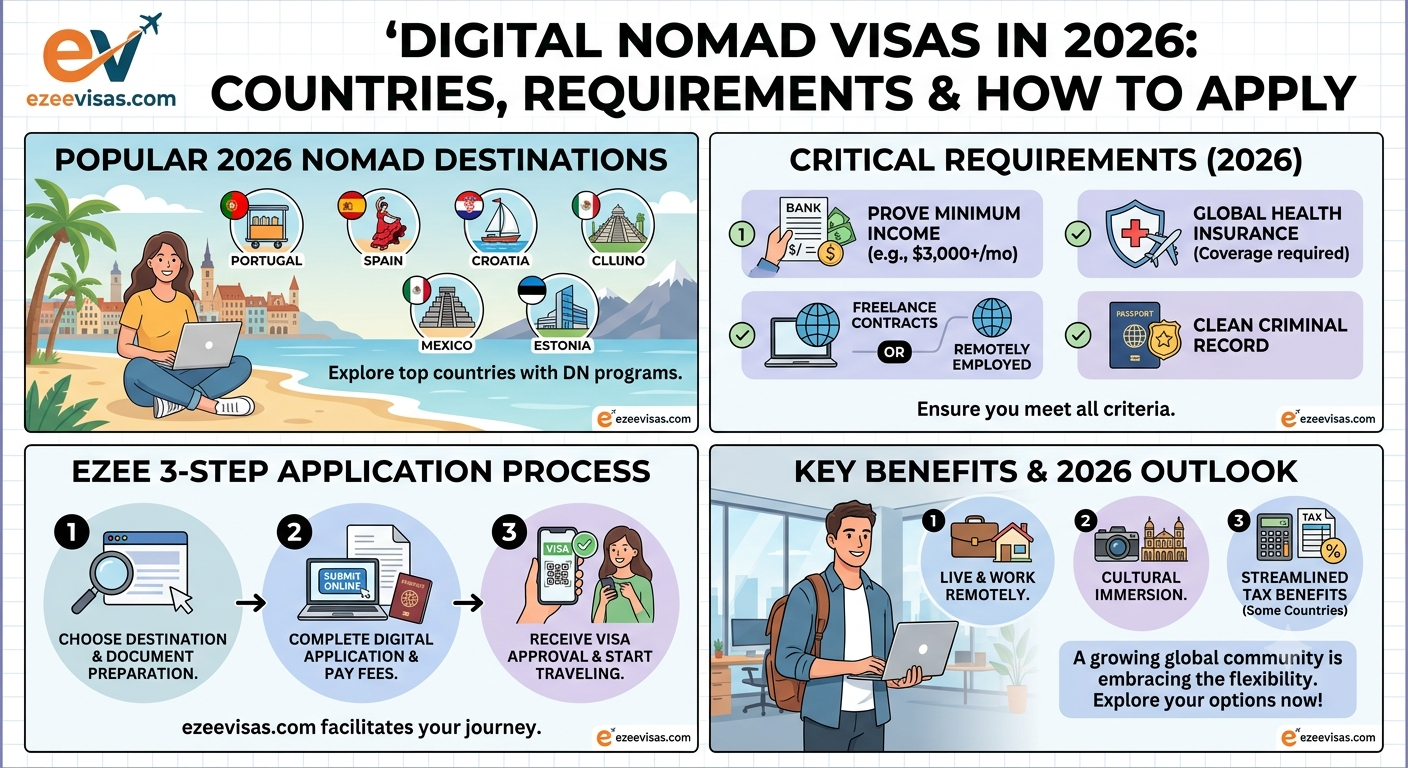
Remote work has permanently changed how professionals live and travel. In 2026, more governments than ever are competing to attract location-independent workers through specialized visa programs. These programs allow freelancers, entrepreneurs, and remote employees to legally live abroad while working for companies or clients based elsewhere.
If you're researching digital nomad visa countries, understanding eligibility requirements, income thresholds, tax implications, and application procedures is essential before making your move.
This comprehensive guide covers everything you need to know about digital nomad visas in 2026, including the best countries, requirements, benefits, and step-by-step application guidance.
What Is a Digital Nomad Visa?
A digital nomad visa is a temporary residency permit designed specifically for remote workers who earn income from foreign employers, clients, or businesses.
Unlike tourist visas, digital nomad visas legally allow individuals to stay in a country for extended periods—often six months to several years—while continuing to work remotely.
Key Features of Digital Nomad Visas
- Legal long-term residence
- Ability to work remotely for foreign companies
- Access to local banking and services
- Potential tax benefits
- Renewal options in many countries
- Family sponsorship opportunities
As remote work continues expanding globally, the number of digital nomad visa countries has grown significantly, giving professionals more flexibility than ever before.
Why Digital Nomad Visas Are Growing in 2026
Governments recognize that remote workers contribute to local economies without competing directly in domestic labor markets.
Benefits for Host Countries
- Increased tourism spending
- Long-term rental demand
- Economic diversification
- Attraction of global talent
- Support for local businesses
Benefits for Remote Workers
- Legal residency
- Improved quality of life
- Lower living costs
- Access to healthcare systems
- Greater travel flexibility
- Better work-life balance
These mutual benefits have accelerated the expansion of digital nomad programs worldwide.
Best Digital Nomad Visa Countries in 2026
The following destinations are among the most popular options for remote workers due to affordability, infrastructure, lifestyle, and visa accessibility.
Portugal Digital Nomad Visa
Portugal remains one of the most attractive destinations for remote workers.
Why Choose Portugal?
- Excellent weather
- Strong internet infrastructure
- Affordable living outside Lisbon
- High quality healthcare
- Access to the Schengen Area
Portugal Visa Requirements
- Proof of remote employment or freelance income
- Minimum income threshold
- Valid health insurance
- Clean criminal record
- Accommodation documentation
Ideal For
- Remote employees
- Freelancers
- Entrepreneurs
- Long-term European residents
Spain Digital Nomad Visa
Spain continues to attract thousands of remote professionals annually.
Advantages of Spain
- Vibrant lifestyle
- Reliable transportation
- Excellent healthcare
- Strong coworking ecosystem
- Access to European markets
Spain Digital Nomad Visa Requirements
- Remote work contract
- Proof of income
- Health insurance coverage
- Background checks
- Valid passport
Best Cities for Digital Nomads
Barcelona
Known for technology startups and international communities.
Valencia
Offers affordability and a high quality of life.
Madrid
Ideal for professionals seeking networking opportunities.
Estonia Digital Nomad Visa
Estonia pioneered many digital governance innovations and remains a leader in remote work policies.
Why Estonia Stands Out
- Fully digital services
- Startup-friendly environment
- Efficient bureaucracy
- Advanced technology ecosystem
Eligibility Requirements
- Remote employment verification
- Stable monthly income
- Health insurance
- Passport validity requirements
Best For
- Tech professionals
- Entrepreneurs
- Freelancers
- Startup founders
Croatia Digital Nomad Visa
Croatia continues to rank among Europe's most affordable coastal destinations.
Benefits
- Beautiful coastline
- Affordable cost of living
- Growing remote worker community
- Safe environment
Requirements
- Proof of remote income
- Health insurance
- Background check
- Accommodation details
Popular Locations
Split
A favorite among international remote workers.
Zagreb
Offers urban conveniences and business opportunities.
Dubrovnik
Combines historical charm with modern amenities.
Greece Digital Nomad Visa
Greece remains highly attractive for location-independent professionals.
Key Benefits
- Mediterranean lifestyle
- Affordable living options
- Strong expat communities
- Rich cultural experiences
Application Requirements
- Remote employment proof
- Income verification
- Health insurance
- Passport documentation
Recommended Cities
- Athens
- Thessaloniki
- Chania
- Heraklion
United Arab Emirates Digital Nomad Visa
The UAE has established itself as a premium destination for remote professionals.
Advantages
- Modern infrastructure
- Global business hub
- High-speed internet
- International networking opportunities
Requirements
- Proof of employment
- Minimum monthly income
- Health insurance
- Passport validity
Best Location
Dubai
Dubai remains one of the world's leading hubs for digital entrepreneurs and remote workers.
Thailand Digital Nomad Visa
Thailand continues attracting remote workers due to affordability and lifestyle benefits.
Why Thailand Is Popular
- Low living costs
- Excellent food culture
- Strong digital nomad communities
- Modern coworking spaces
Common Requirements
- Income verification
- Health insurance
- Employment documentation
- Passport requirements
Top Nomad Cities
Bangkok
Ideal for networking and business opportunities.
Chiang Mai
A long-time favorite among freelancers.
Phuket
Offers beach living with modern amenities.
Digital Nomad Visa Requirements: What Most Countries Need
Although each program differs, most digital nomad visa countries require similar documentation.
Proof of Remote Employment
Applicants generally need evidence that they work remotely for:
- Foreign companies
- International clients
- Their own business
Acceptable Documents
- Employment contracts
- Client agreements
- Business registration certificates
- Freelancer portfolios
Minimum Income Requirements
Most countries require applicants to demonstrate financial stability.
Common Income Thresholds
Income requirements vary significantly and may include:
- Monthly salary minimums
- Annual income requirements
- Savings verification
Higher-income destinations often require greater proof of earnings.
Health Insurance
Comprehensive health coverage is typically mandatory.
Coverage Should Include
- Emergency treatment
- Hospitalization
- Medical evacuation (when applicable)
- International coverage
Clean Criminal Record
Many governments require applicants to submit:
- Police clearance certificates
- Background checks
- Criminal record documentation
These documents may need official translation or apostille certification.
Accommodation Proof
Applicants often need evidence of housing arrangements.
Examples Include
- Rental agreements
- Hotel reservations
- Property ownership documents
- Invitation letters
How to Apply for a Digital Nomad Visa
The process is generally straightforward if documentation is prepared correctly.
Step 1: Choose a Destination
Evaluate:
- Cost of living
- Tax obligations
- Internet quality
- Healthcare access
- Lifestyle preferences
Step 2: Verify Eligibility
Review:
- Income requirements
- Employment restrictions
- Family eligibility
- Visa duration
Confirm that you meet all criteria before applying.
Step 3: Gather Documentation
Prepare:
- Passport
- Income proof
- Employment verification
- Insurance documents
- Criminal record certificates
- Application forms
Having complete documentation significantly improves approval chances.
Step 4: Submit Your Application
Depending on the country, applications may be submitted:
- Online
- Through embassies
- Via immigration offices
- Through specialized visa portals
Step 5: Attend Interviews or Biometrics
Some governments require:
Biometrics Collection
- Fingerprints
- Photographs
- Identity verification
Visa Interviews
Applicants may be asked about:
- Employment status
- Income sources
- Accommodation plans
Step 6: Receive Approval and Relocate
Once approved, you can:
- Enter the country
- Register local residence
- Open bank accounts
- Access eligible services
Always review residency obligations after arrival.
Tax Considerations for Digital Nomads
Taxes remain one of the most important aspects of international remote work.
Key Questions to Ask
Will You Become a Tax Resident?
Many countries apply tax residency rules after a specific number of days.
Is Foreign Income Taxed?
Some countries offer favorable tax treatment for foreign-earned income.
Are Tax Treaties Available?
Tax treaties may help avoid double taxation.
Because tax laws vary considerably, professional tax advice is strongly recommended before relocating.
How to Choose the Best Digital Nomad Visa Country
The ideal destination depends on your personal and professional goals.
Choose Portugal If You Want
- European residency
- Strong infrastructure
- Balanced lifestyle
Choose Spain If You Want
- Vibrant cities
- International communities
- Access to Europe
Choose Estonia If You Want
- Digital-first government services
- Startup opportunities
- Technology-focused ecosystems
Choose Croatia If You Want
- Coastal living
- Lower costs
- Relaxed lifestyle
Choose Thailand If You Want
- Affordable living
- Established nomad communities
- Excellent food and culture
Choose UAE If You Want
- Business networking
- Premium infrastructure
- Global connectivity
Common Mistakes to Avoid
Many applicants experience delays due to preventable issues.
Incomplete Documentation
Missing paperwork remains one of the leading causes of rejection.
Underestimating Income Requirements
Always verify current financial thresholds before applying.
Ignoring Tax Obligations
Visa approval does not automatically determine tax status.
Purchasing Insurance Too Late
Health insurance is often mandatory during application review.
Using Tourist Visas for Remote Work
Many countries now provide dedicated legal pathways through digital nomad visas.
The Future of Digital Nomad Visas
The digital nomad movement continues expanding rapidly in 2026. Governments increasingly recognize remote workers as a valuable source of economic growth, leading to more flexible residency programs and streamlined application processes.
As competition among digital nomad visa countries intensifies, applicants can expect improved benefits, faster approvals, and broader eligibility options in the coming years.
Conclusion
Digital nomad visas have transformed international remote work by providing legal, long-term residency options for professionals seeking greater freedom and flexibility.
Whether you're drawn to Portugal's European lifestyle, Spain's vibrant cities, Estonia's digital innovation, Croatia's coastal charm, Thailand's affordability, or the UAE's global business environment, there are now more opportunities than ever to work from anywhere.
Before applying, carefully compare requirements, income thresholds, healthcare obligations, and tax implications. By choosing the right destination and preparing your documentation properly, you can successfully launch your international remote work journey in 2026.
Frequently Asked Questions
Which country has the easiest digital nomad visa in 2026?
Requirements change regularly, but countries with streamlined online application systems and moderate income thresholds are often considered easier for applicants.
How much income is required for a digital nomad visa?
Income requirements vary significantly by country and can range from moderate monthly earnings to substantial annual income thresholds.
Can freelancers apply for digital nomad visas?
Yes. Most digital nomad visa countries accept freelancers, consultants, contractors, and self-employed professionals.
Do digital nomad visas lead to permanent residency?
Some countries offer pathways toward longer-term residence, while others remain temporary programs with renewal options.
Are digital nomad visas worth it?
For remote professionals seeking legal residency, international mobility, and lifestyle flexibility, digital nomad visas can provide substantial benefits compared with relying on tourist visas.